
York Previous Residents by Era
The backward trail for a York address changes with the date. Recorded instruments establish a transfer chain. Directory and telephone listings offer a reported address clue in a particular issue. A released federal census gives a dated household snapshot, and local research collections can add maps, obituaries, or estate material. Start with the source whose coverage matches the period in question, then use another source to corroborate it. None of these sources alone proves a continuous presence at the address.
| Source | Years it covers | Where held | What it shows |
|---|---|---|---|
| Recorder / SearchIQS grantor-grantee | 1749-1912; 1913-24; 1925-43; 1944-75; 1976-80 | County-linked historical search | Party names and recorded instruments or images by indexed era |
| Landex public access | Deeds and miscellaneous records 1944-present; mortgages 1974-present; parcel IDs 2001-present | Links from the York County Recorder | Modern recorded documents and parcel linkage |
| State Archives York guide | Deed books 1749-1859; grantor/grantee indexes 1749-1912 | Pennsylvania State Archives research route | Historic book and index fallback |
| City directory catalog | Documented issues 1881-1905 | FamilySearch catalog; access can depend on login or affiliate access | Historical address and affiliation clues |
| Municipal Polk appendix | Selected study-area editions 1919-1997 | City-hosted Appendix C | Address, reported names, business, vacancy, and qualifiers by edition |
| Federal census | Released historical censuses under the federal 72-year rule | National Archives and genealogy access routes | Household snapshot on the census date |
For a recent York address history, begin with Assessment and the current deed reference. For an older address, use the County's historical system, the archives fallback, and edition-specific directory evidence. The system split is a coverage fact, not a gap that a searcher should fill by guessing.
York Previous Residents and Deeds
Assessment Basic Search supports Owner, Parcel, and Address modes. It can establish a current property association, parcel, and recorded book/page. The Property Viewer offers Property Address, Owner Information, and 18-digit Parcel ID Number search modes. It can display the property address, owner, previous owner, sale and deed data, tax and assessment fields, and a mailing component. These are property-record facts, not a list of every person at the address.
Use the York County assessment search to confirm the parcel before opening the current recorded instrument. Keep the book/page and legal description with each transfer. If the current record lacks enough detail, the Recorder counter has public terminals, most index books, and microfilm or books as a fallback; staff can demonstrate access without performing a title search.
York County's Recorder research guidance describes the backward deed-recital method used to carry one York address into earlier records.
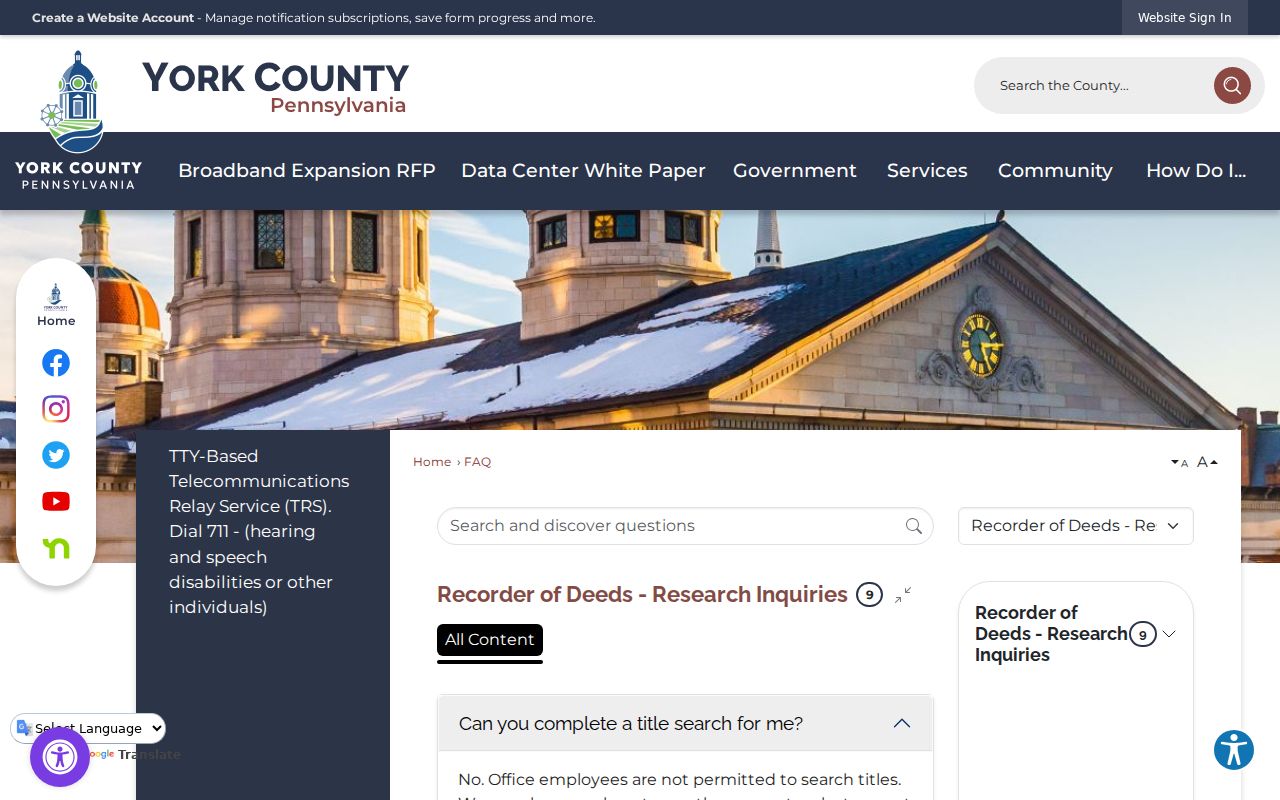
The Recorder route documents recorded transfers. A directory or census record is still needed for a dated household clue.
- Grantor
- The party transferring an interest in a recorded instrument.
- Grantee
- The party receiving that recorded interest.
- Chain of title
- The sequence of recorded transfers traced through deeds and their prior references.
- Legal description
- The parcel, lot, block, acreage, plan, or other recorded land description that is more durable than a street form.
York's Same Premises Method
York's Recorder FAQ gives a practical backward method. Open the current deed and look in the recital, normally after the legal description, for wording that begins “It being the same premises which...”. Record the cited book and page. Open that prior deed, identify its recital, and repeat. If the deed cites a plan book and page, inspect the plan as well, while remembering that not every plan was recorded.
- Find the current parcel and book/page in the Assessment record or Property Viewer.
- Locate the current instrument in the Recorder search by party, date, book/page, instrument number, or property description.
- Copy the prior book/page named in the same-premises recital, along with the grantor, grantee, legal description, and UPI.
- Open the cited earlier instrument and repeat the recital check, testing historic street names when necessary.
- Move to SearchIQS, Landex, State Archives material, or the Recorder counter according to the date interval.
The current deed need not name every prior owner in full. The cited reference, legal description, and parcel identifier are the reliable handoff points in a York chain of title.
Note: A downloaded image can help research, but a Recorder-certified copy is obtained through the Recorder counter rather than assumed from remote access.
York UPI Holds a House Trail
York County's Uniform Parcel Identifier connects a familiar address to the legal tract. The current approach came from County Ordinance 1999-03, with verification beginning January 2, 2001. A UPI must be on the first page of a recordable instrument. The County's Parcel Verification Center checks owner name, property location, municipality, previous reference, and available lot or acreage information. The City format example, 09-214-01-0007-00000, shows why the legal key should be copied with each old book/page.
A Property Viewer mailing component may help distinguish correspondence data from the physical property address. It does not establish a person's current location. When a deed uses an older street form, carry the UPI, legal description, lot or block, and book/page forward rather than relying on the street name alone.
York Streets With Former Names
Street-name changes are a York house-history quirk. The City's special ordinance tables record streets and alleys that were opened, named, renamed, or vacated. Table B records Centre Square changing to Continental Square in 1925 and Fulton changing to Lafayette in 1902. The Northwest Triangle study also reports North Water Street appearing as North Pershing Avenue on later Sanborn maps it used, beginning with the 1933 maps.
For an earlier York household, test both the older and current street forms in deed, directory, map, and census work. Then use the legal description, UPI, or book/page to confirm that the address is the same tract. York's original square-block plan is useful historical context, but the research did not verify one universal address-numbering rule for the City.
York Directory and Census Pairing
Directories and census sources answer a different question from the deed chain. The York County History Center holds York City and County directories, maps, newspapers, yearbooks, and onsite research databases. FamilySearch catalogs named York directory issues from 1881 through 1905, but a catalog entry's digitized label does not guarantee that a particular image is open from every location. The History Center reading room is an alternate access channel when access is restricted.
- Choose the directory edition nearest the address date and write the street form, number, name spelling, and any rear or corner qualifier exactly as printed.
- Check the nearby edition instead of presuming every year was published or survives.
- Pair the edition with the nearest released federal census, keeping the census date distinct from the directory publication date.
- Compare the address and names with the deed chain, then use newspaper, obituary, cemetery, or estate evidence only for the specific question at hand.
The City-hosted Polk appendix documents selected study-area editions from 1919 through 1997. It can show reported names, businesses or institutions, vacancy, and location qualifiers. Those listings should be read as edition-specific reports, not ownership proof. The collection details are available through the York City Directory page.
York Previous Residents at History Center
The York County History Center's Library and Archives is the key documented local property-research shelf. Its materials include York-focused histories, City and County directories, historic atlases and maps, periodicals, York newspaper microfilm, surname files, church material, estate and tax research, cemetery sources, and property-history guidance. Users register, work from the catalog and indexes with staff or volunteer assistance, use call slips, and handle one family or manuscript file at a time. Research by mail is available, while interlibrary loan is not.
The History Center's genealogy and property guidance identifies York deeds, maps, local history, and related research channels.
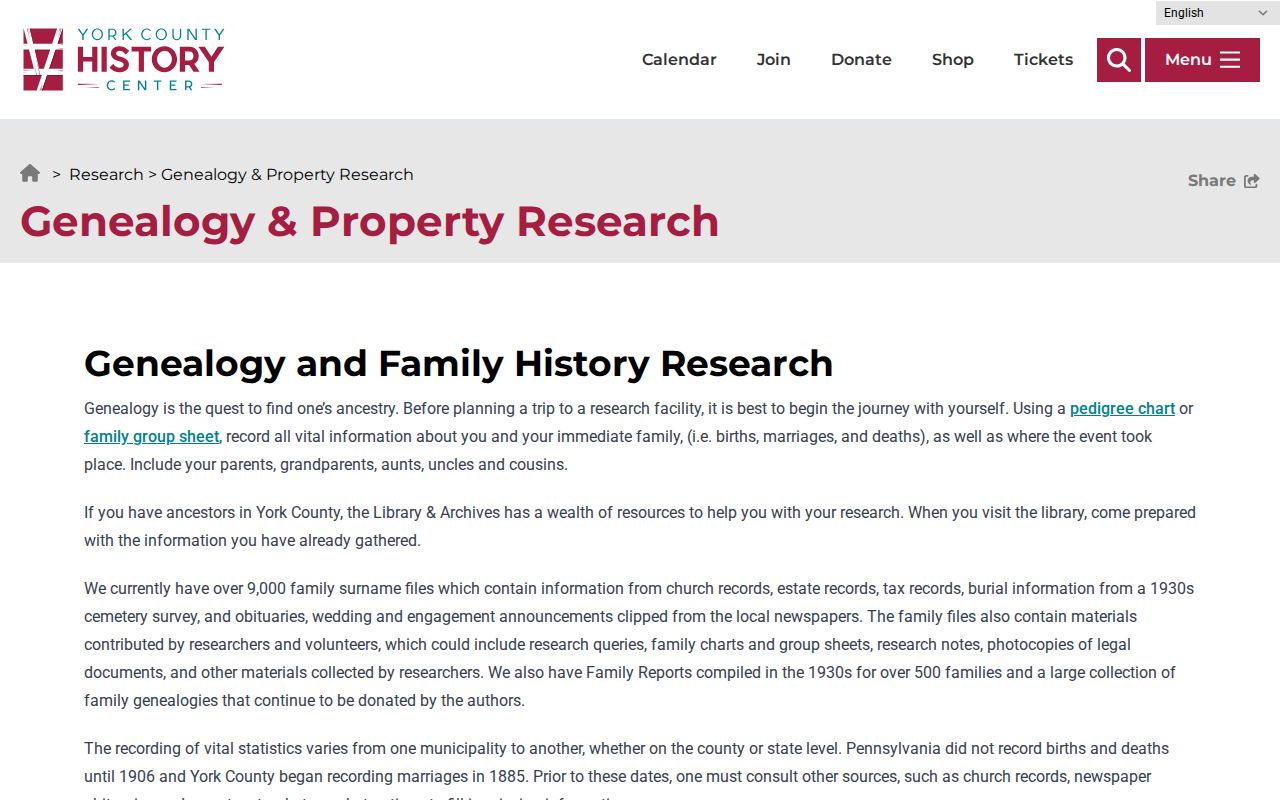
The Center can supply context around a property trail, while the Recorder remains the custodian for a recorded transfer.
Its visitor page posts Tuesday through Saturday hours, reservations recommended, and a reading-room address at 121 North Pershing Avenue. Contact the Center before arrival because collection access and service options can change.
York Sanborn Record Limits
Sanborn fire-insurance maps can be a building-history fallback, but the exact City of York issue years and local-access years were not verified in the primary catalog sources reviewed. That is the verified limit. The Library of Congress Sanborn research guide says public-domain maps are digitized except for some 1923-1930 sheets and are arranged by state, city, and date. It does not establish an exact York run here.
Use a map only after confirming the particular City, date, and access route. A map can help distinguish a building or street form; it does not replace a recorded deed, a directory edition, or a census entry.
York Assessment Starts the Trail
Assessment data is the modern starting point for a house trail because it offers Basic Search by Owner, Parcel, or Address and identifies a parcel association with a recorded reference. The public Property Viewer complements the assessment result with map and property-card fields. York County states that its display boundaries are not survey accuracy, and its tax and assessment information follow separate update schedules. Treat the screen as a starting point for the next custodian, not the final authority on a transfer.
York County Assessment Information identifies the public data and Property Viewer routes used to anchor a current address to its parcel.
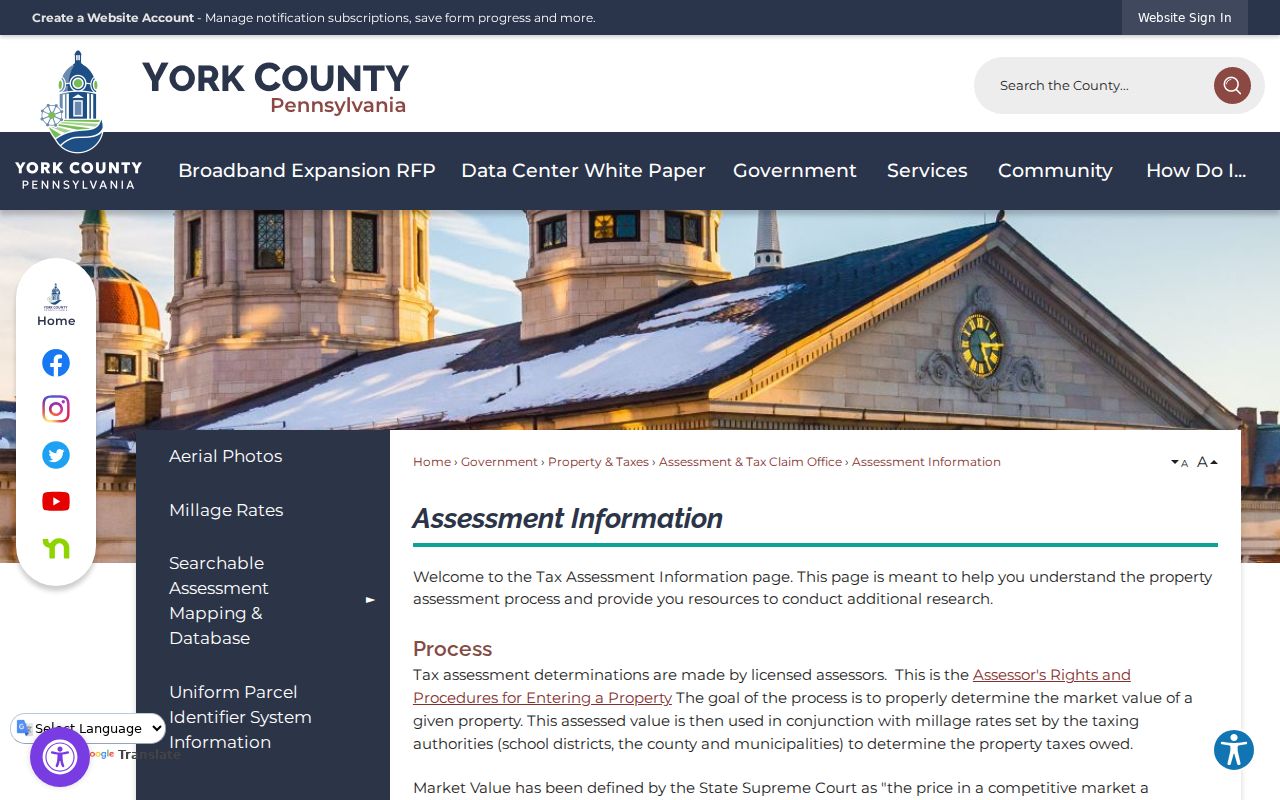
Once the parcel and book/page are known, the York deed search can carry the recorded history backward across the appropriate era system.
York Estates Finish a House Trail
When a property trail reaches a death or estate event, the York County Register of Wills is the relevant local custodian for probate, estate letters, and related filings. Letters Testamentary or Administration identify an estate's qualified representative. They do not establish every heir without the underlying estate material. The History Center's newspaper collections, obituary notices, cemetery sources, and surname files can add another dated research lead.
For an older vital-record question, select the custodian by date. Pennsylvania's State Archives keeps archival birth and death records in its documented public windows, while York's Clerk of Orphans' Court and County Archives have limited earlier material. A request should name the record, date range, and reference where possible.
York Previous Residents Limits
House-history research is not a way to identify or track people who are currently at an address. A recorded owner, a separate mailing component, a directory listing, and a census household are different facts with different dates. Protected voter addresses, motor-vehicle records, utility accounts, sealed court material, and protected vital information are outside a house-history trail. A substitute address in Pennsylvania's Address Confidentiality Program is not a discrepancy for a researcher to unravel.
Where the question is the current record chain for an entire named street, use the York streets resource rather than extending a past-household source beyond what it can show.