
York Directory Collections
York's historical shelf is spread across a local reading room, catalogued microfilm, a municipal study appendix, and a federal library collection. The York County History Center identifies York City and County directories among its local holdings, alongside maps, yearbooks, newspapers, genealogies, and onsite databases. Its collection is the practical local fallback when a catalog image requires an affiliate setting or when a search needs staff help. The dates below are documented runs, not a claim that each source contains every York issue.
| Collection | Years | Where | Access |
|---|---|---|---|
| FamilySearch catalogued York city-directory microfilm | 1881-82, 1883-84, 1886, 1887-88, 1894-95, 1898-99, 1902, 1903, 1905 | FamilySearch catalog; originals from several repositories | Digitized catalog films, with logged-in and affiliate restrictions to check |
| York City and County directories | Multiple volumes, no complete local shelf run verified | York County History Center Library & Archives | Reading-room collection and staff-assisted research |
| Northwest Triangle Polk appendix | Selected editions from 1919 through 1997 | City-hosted Appendix C | Online study appendix for a defined study area only |
| Pennsylvania White and Yellow Pages, York | June 1957-June 1959 | Library of Congress | 781 digitized images, image/text/PDF access |
The History Center Library & Archives is open Tuesday through Saturday, 10:00 a.m. to 4:00 p.m., and recommends reservations. Users register, use the catalog and staff assistance, submit call slips, and work with one family or manuscript file at a time. Research by mail is available, while interlibrary loan is not. Personal photos without flash or a tripod are permitted; copy requests are due before 4:45.
Note: A directory gap calls for the nearest edition and a second record type, not an assumption that the household vanished.
York Historical Directory Research
The History Center has much more than a directory shelf. Its research material includes more than 35,000 books and pamphlets, 8,800-plus surname files, church records, maps, microfilm, newspapers, manuscripts, and about 90,000 photographs. Its onsite services include Ancestry Library Edition, Newspapers.com Pennsylvania Edition, York County newspaper microfilm, and Fold3. A first visit is best planned around a surname, street, date range, or collection question, since those details let staff point to the appropriate directory volume or companion source.
The History Center research room is shown in the local collections capture below. York historical directory material belongs beside newspapers, maps, and genealogy holdings, not apart from them.
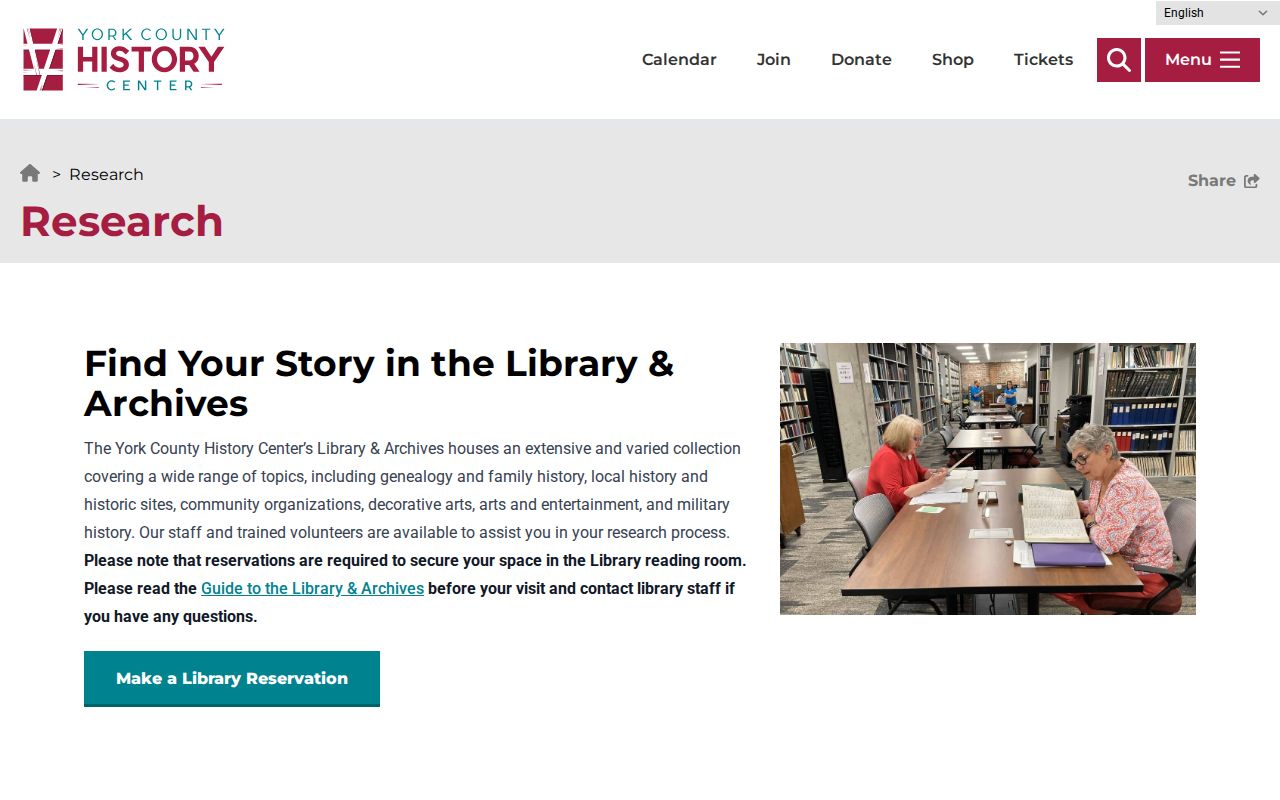
Use the image as a source cue, then ask for the exact volume, film, or index that matches the person's known year and neighborhood.
Paid research is an optional service, not a public name-search fee. The Center lists general genealogy research at $65 for nonmembers and $40 for members, prepaid and nonrefundable, with up to 15 copies and a stated six-to-eight-week estimate. A researcher can also work from the reading room with the normal registration and handling rules.
York Directory Publishers and Films
The named issues on the FamilySearch catalog make the early York directory trail unusually concrete. W. Harry Boyd issued Boyd's York Directory for 1881-82 and 1883-84, then Boyd's York City Directory for 1887-88. The Evening Dispatch office issued Young's York City & County Directory in 1886. Bell Publishing Co. covered York City, Delta, Hanover, and Wrightsville in 1894-95. R. L. Polk & Co. appears for 1898, 1899, 1902, 1903, and 1905; the catalog states that a 1906 issue was not published.
The catalogued York city-directory microfilm displays the publisher, issue, film, item, and digital-film details rather than guaranteeing home access to every image.
Sign in and check the current access notice before making a trip; if an image is restricted, the History Center's affiliate and reading-room channels are a documented alternative.
The Library & Archives visitor information is useful when a catalog result needs a local shelf or film follow-up.
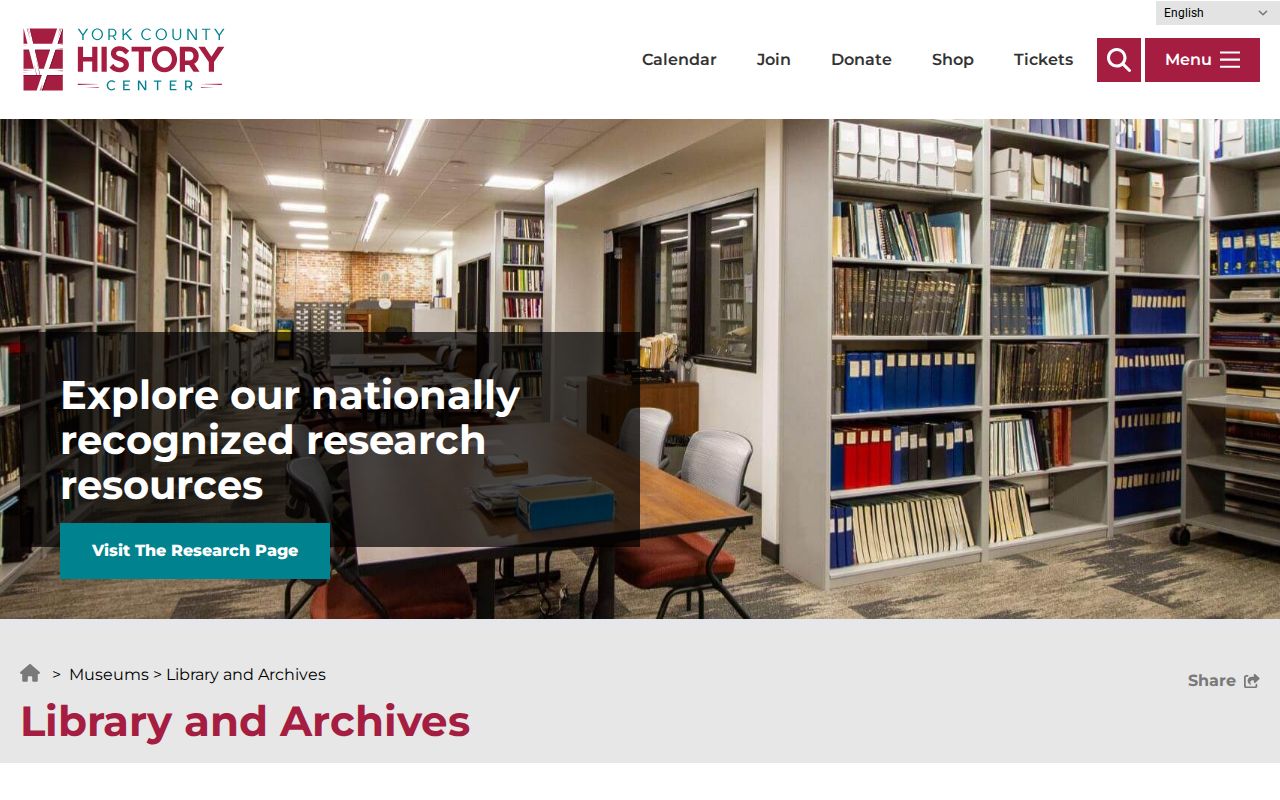
That local access route helps preserve the distinction between a catalogued film and a fully open online image.
York Directory Dates and Gaps
The documented York sequence has publisher changes and breaks. Treat it as a timeline of surviving, catalogued issues rather than as a promise of an annual series. The later municipal appendix likewise records selected Polk editions for its limited study area. A missing year can reflect nonpublication, a collection gap, an access restriction, or a volume held by a different repository.
- 1881-82 and 1883-84: W. Harry Boyd's Boyd's York Directory appears in the catalogued film run.
- 1886 and 1887-88: the Evening Dispatch office issued Young's volume, followed by Boyd's York City issue.
- 1894-95: Bell Publishing Co.'s regional volume included York City, Delta, Hanover, and Wrightsville.
- 1898-1905: catalogued Polk issues appear for 1898, 1899, 1902, 1903, and 1905; the catalog says 1906 was not published.
- 1919-1997: the City appendix records selected Polk editions for the Northwest Triangle study area.
Use the issue date written on the title page, not a guessed publication interval, when comparing a household to census, probate, newspaper, or deed evidence.
Reading a York Directory Entry
A directory entry should be transcribed exactly before it is interpreted. The City-hosted Polk appendix records edition or year, street number, one or more names, a business or institution when present, function, a rear or corner qualifier, and a status such as vacant or furnished rooms. Its entries do not provide a universal owner mark, spouse field, or occupation pattern for all York directory years. Those details vary by edition, so the actual page and its abbreviation key control the reading.
| Edition and year | Shows the date of the reported listing, not the full span of a stay. |
|---|---|
| Address | Records the street number and street form used in that edition. |
| Name or names | May show multiple people and spelling variants at one address. |
| Business or institution | Appears when the entry includes one, with a function where reported. |
| Qualifier or status | Can identify a rear or corner location, vacancy, furnished rooms, or apartments. |
- Criss-cross directory
- A directory arranged by street and address rather than only by personal name. The research confirms it as a directory type, but not a complete York run or year span.
- Householder index
- A name-oriented index to household listings. Check the title page and volume arrangement before assuming one exists in a given issue.
- Abbreviation key
- The volume's own explanation of shortened terms and marks. Photograph or note it before reading individual listings.
York Directories in the Polk Appendix
The Northwest Triangle appendix is a useful York directory comparison source because it puts selected Polk street entries across time. It cites editions for 1919; 1923; 1929-30; 1933-34; 1939-40; 1945-46; 1950; 1955; 1960; 1965; 1970; 1975; 1981; 1986; 1992; and 1997. The appendix is specifically evidence for that study area and those editions. It should not be stretched into proof that every address, issue, or person is represented.
The City's Northwest Triangle Polk appendix provides the selected address-level tables described here. At 200 North Beaver, it shows changing names, furnished-room entries, a later apartment notation, and other dated listings. The same address does not establish legal title or continuous residence.
This is York's directory quirk: street evidence can change even where the structure did not. A listing that moves from a named person to a vacancy or furnished rooms may reflect the directory's reporting for that edition, not a complete story about every person connected to the address.
York Directory Street-Name Changes
Before declaring an old address absent, search the street name used in the period. York's official special-ordinance tables include a naming and name-change table. Examples include Centre Square becoming Continental Square in 1925, Allison becoming West Hope in 1949, Baptist becoming Hope Alley in 1929, and Fulton becoming Lafayette in 1902. York research should run both forms and preserve the printed suffix, alley label, or market-space wording from the volume.
The History Center's genealogy and property guidance places deeds, maps, and local-history routes beside surname work.
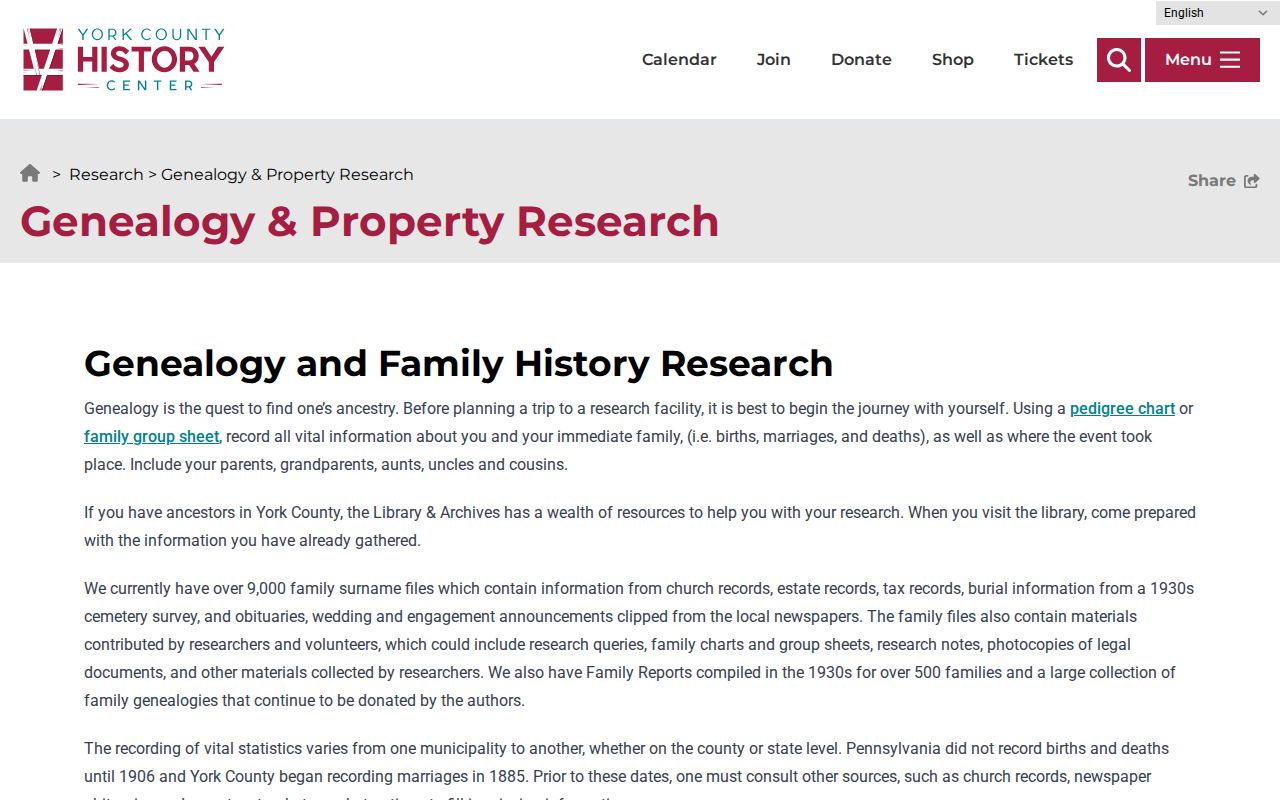
A legal description, UPI, or deed book and page can bridge the historic street form to the parcel when the historical directory alone leaves doubt.
Note: York's research documents street-name changes, not a verified citywide renumbering rule.
York Directory Surname Variants
Historic spelling is a common reason a name seems missing. The History Center's online Surname Database uses one field, “Search by Name or Variation,” and returns both the submitted surname and a normalized control name. The Center directs researchers to use that control spelling to retrieve related variations. The result is a locator, not the complete digital surname file; full contents remain a reading-room resource.
The York County History Center Surname Database shows the control-name method used to organize local research files.
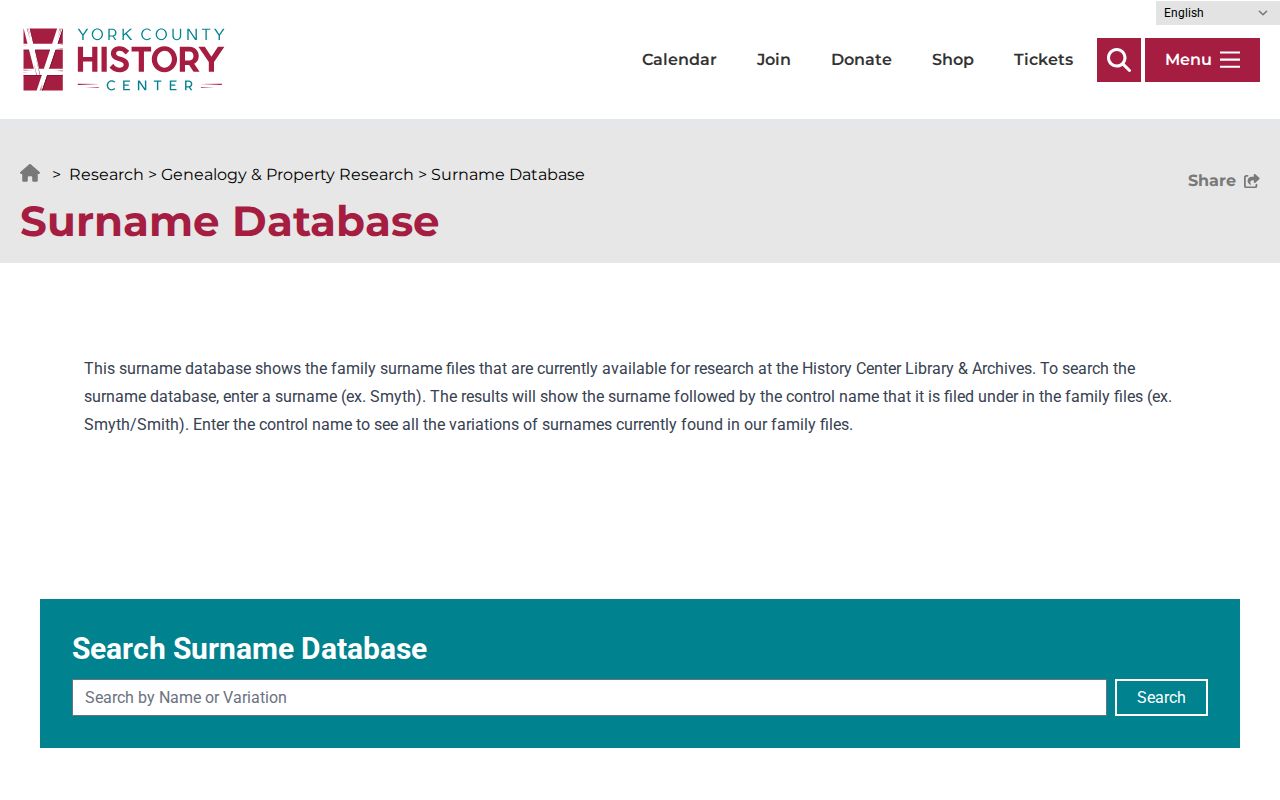
Record the name as printed in the York volume, then test the control name and variations in the Center's related files, newspapers, and cemetery material.
Tracing York Directories with Census and Deeds
For family history, York directories are most useful as dated stops between broader records. Start with a reliable name or address and inspect nearby available editions rather than assuming an annual run. Keep each spelling, number, street suffix, room or rear qualifier, and business detail. Then pair the directory year with the nearest released federal census, which supplies a household snapshot at its own date. Where the question shifts to present-day name verification, use the focused workflow on the York resident lookup page rather than treating a historical listing as current.
- Find the first documented York directory issue that fits the name, address, and date.
- Compare the closest later and earlier available editions, writing down each printed change.
- Search current and historic street names when an address no longer matches the modern form.
- Pair the edition with the nearest released federal census and local newspaper or obituary material.
- Use the Recorder's legal description, UPI, and deed chain when ownership needs separate corroboration.
A name that disappears can indicate a move, death, an unlisted household, a changed spelling, or a directory gap. The answer comes from independent records, not from the blank space alone.
York Directory Phone and Newspaper Partners
The Library of Congress York telephone-directory run covers June 1957 through June 1959 and has 781 images with image, text, and PDF access. It is a subscriber-listing source, not a Polk directory. Its original covers are in the Library's Microform Reading Room. That distinction matters because telephone, city, professional, and street directory content can overlap without having the same publication pattern or fields.
York's newspaper layer can test a date or relationship suggested by a listing. The History Center identifies a Death Index to York County newspapers for 1783-1909 and a Marriage Index for the same span, plus uploaded searchable titles and newspaper microfilm. Church records, cemetery cards, and family reports are leads that need corroboration, especially where civil records have a date gap.