
Finding York Residents Through Records
York does not maintain one complete public list of everyone who lives in the city. Start with the record that fits the question. An address can lead to County assessment data or the Property Viewer, while a recorded owner and date can lead to the Recorder's index. A court question belongs in the state docket search, and an older address belongs with dated directories, newspapers, and census material. Each source is narrower than a general residents directory, which is why the date and the type of fact matter.
A matching name is only a lead. The strongest York search uses two independent anchors, such as a parcel and deed book/page, a directory issue and census entry, or an estate file and obituary. A property owner, a mailing address, and a current occupant are different facts. That distinction keeps a useful search from becoming an unsupported claim about a household.
- Begin with the name, address, or date already known, and choose the York custodian that records that fact.
- For property, check County assessment data or the Property Viewer and write down the parcel identifier and recorded book/page.
- Use the Recorder's party, date, or property-description fields to confirm the instrument trail.
- For a past household, compare the closest York directory edition with census, newspaper, cemetery, or probate material.
- When an existing City or County record is not online, send the responsible custodian a focused Pennsylvania Right-to-Know Law request.
Note: A narrow request for an existing record is more useful than asking an office to create a new report about a person.
York Offices That Hold Resident Records
Several York County offices keep records that can document an address, a recorded party, an estate role, or an official filing. The Recorder and Assessment Office are the usual starting points for parcel work. The Register of Wills and Clerk of Orphans' Court preserve distinct probate, estate, marriage, and historical-record routes. Court files also have separate custodians. The York street records path goes deeper into the address sequence without treating these offices as a household roster.
York County Recorder of Deeds
28 East Market Street, Suite 122
York, PA 17401-1590
717-771-9295
York County Assessment Office
28 East Market Street, Room 105
York, PA 17401-1585
717-771-9232
Register of Wills and Clerk of Orphans' Court
45 North George Street, second floor
York, PA 17401
717-771-9607 and 717-771-9288
The offices offer different access channels. County public terminals are available in Assessment and Recorder offices, while the Recorder's posted policy prohibits photographing or scanning books and computer screens there. Take written notes, preserve the record reference, and ask the custodian about a certified copy when one is needed.
The York Recorder links the County's deed access and counter services.
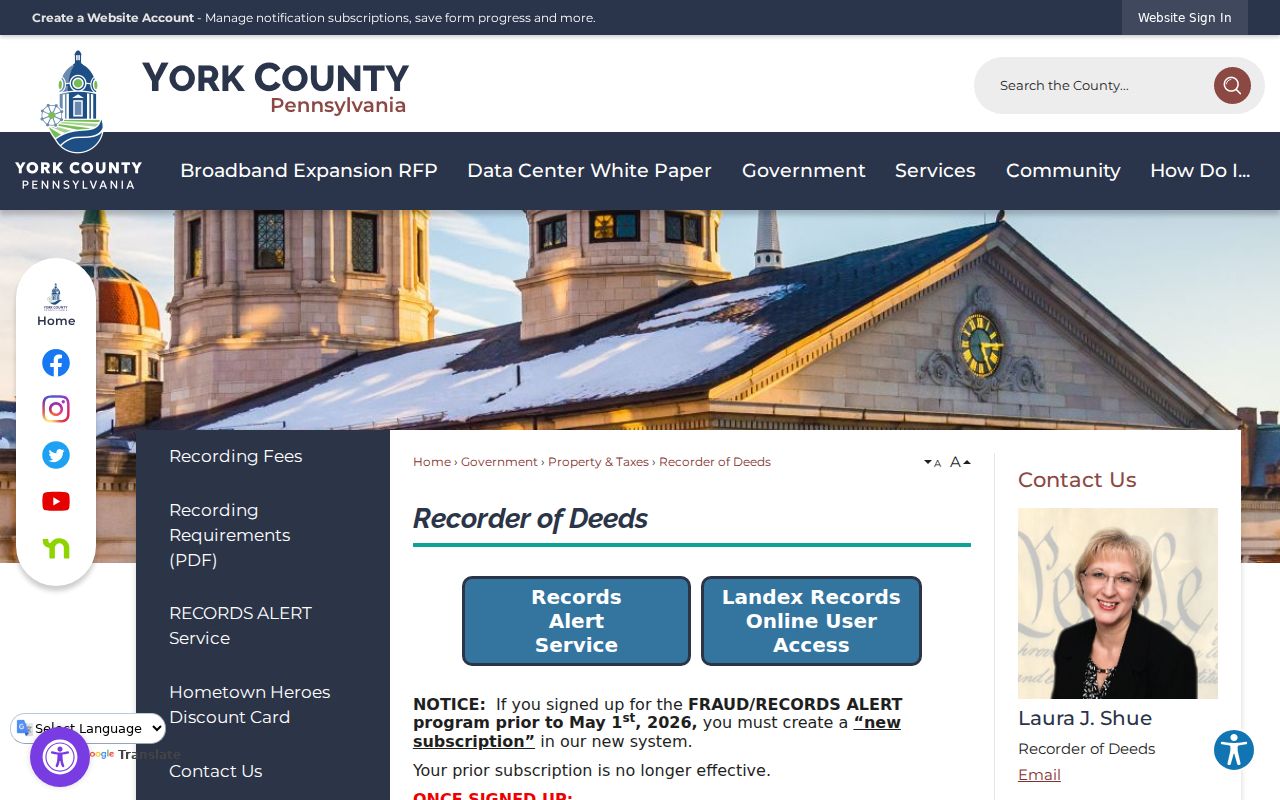
The Recorder image points to the office that links York's deed index, access options, and counter services.
York Property Facts Are Not Household Lists
York County's Real Estate Assessment Data is the public version of its internal database. It offers Basic Search by owner, parcel, or address, along with Advanced/Sales Search and Map Search. The Property Viewer is a complementary map route. It can show a property address, owner and previous-owner fields, sale and deed information, parcel ID, assessment and tax data, municipal context, and a mailing component. Assessment records update weekly, but recently entered material may not appear at once.
The map and assessment results help identify a parcel. They do not prove that every person at the property appears in the public record. A mailing component can differ from the property address, and a recorded owner can be different from a present occupant. Those limits are central to a careful York residents directory search.
The County assessment landing page shows the verified Basic, Advanced/Sales, and Map Search routes.
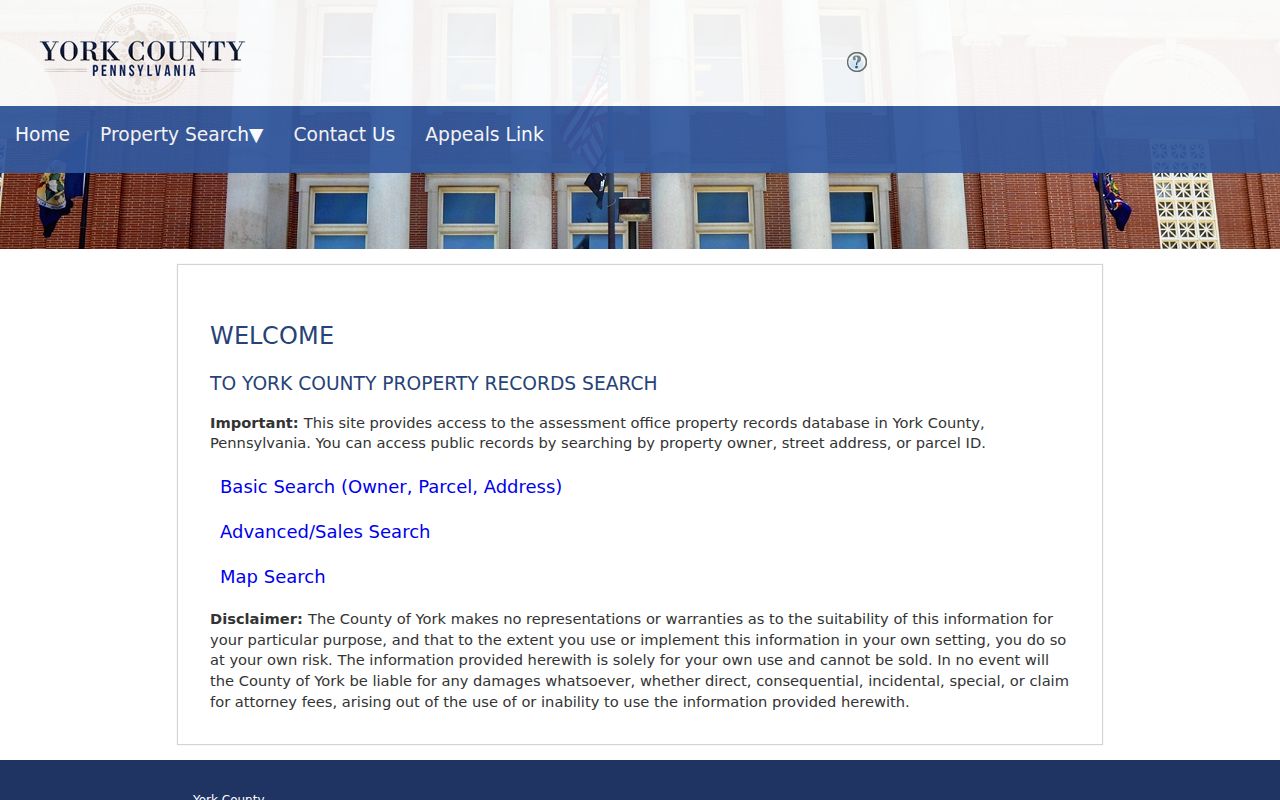
These choices are a starting point for a parcel record, not a direct list of residents.
York Recorder Fields for a Name Trail
The public York Recorder Name Search supports more than a simple last-name lookup. A searcher can choose a standard search or sort by date or name, limit an instrument category, select Both, Company, or Human entity types, and enter a grantor or grantee. Date ranges, book and page controls, an instrument number, and property-description fields make it possible to narrow a result. Standard searching removes spaces, punctuation, and special characters, so record the spelling used in the instrument as well as the search spelling.
| York Recorder field | Input | Useful detail |
|---|---|---|
| Grantor or Grantee | Last/first name or company | Choose the recorded party role or search either party. |
| Category | Checkbox group | Includes deeds, mortgages, liens, plats, easements, releases, and other instruments. |
| Start and end date | Date pair | Use mm/dd/yyyy to narrow a document period. |
| Book, page, suffix | Select and text | Use the recorded reference; a historical 70-c entry is entered as 70C. |
| Property description | Text fields | Subdivision, lot, block, section, map, phase, unit, and description fields are available. |
Modern Landex access covers deeds and miscellaneous documents from 1944 forward, mortgages from 1974, and parcel-ID lookups from 2001. County-linked historical SearchIQS access covers older York intervals beginning in 1749. That system split often explains a missing result better than a name search does.
The York Recorder instrument search displays the party, date, category, book/page, and property-description routes.
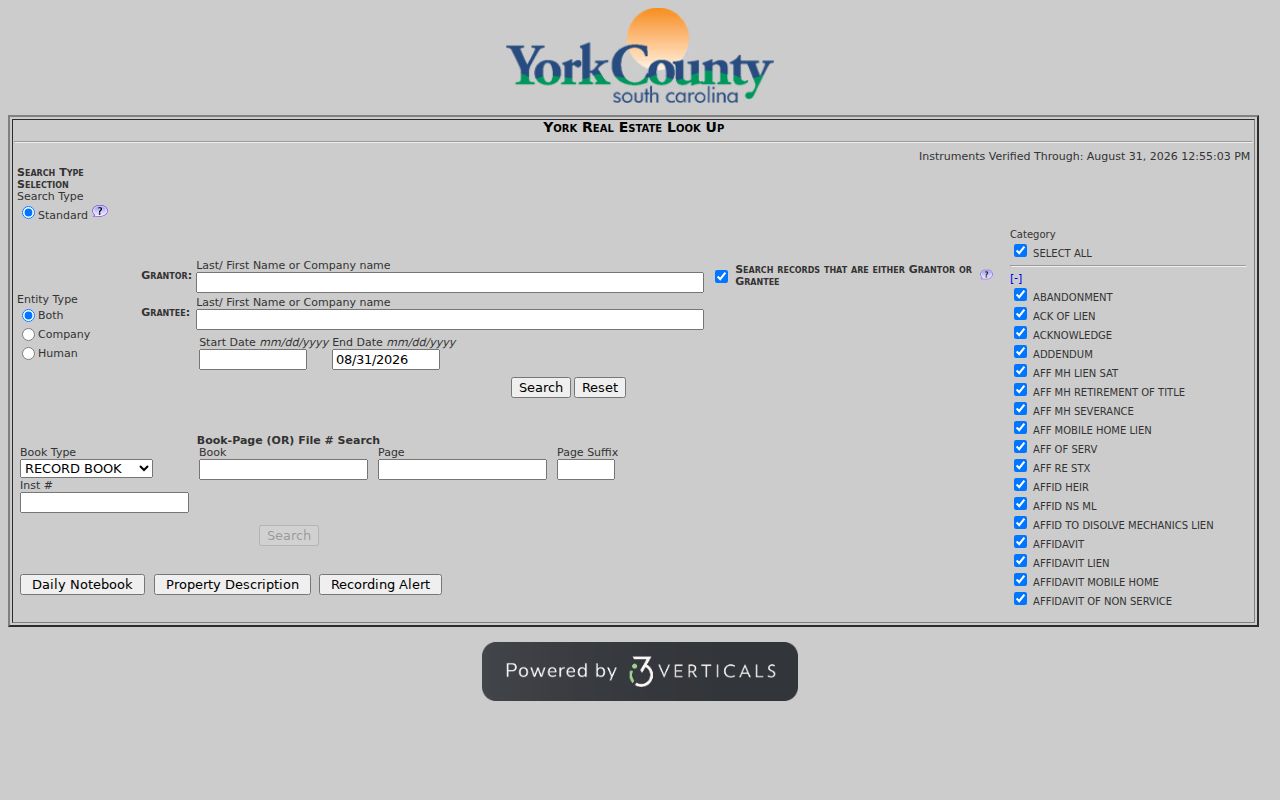
The form is useful for confirming a recorded relationship to land, not for declaring a person's current location.
York Court Dockets Verify Limited Facts
York County uses the Pennsylvania Judiciary public Case Search and Docket Sheet service for Court of Common Pleas and Magisterial District Court docket location. Participant Name mode can be narrowed with last name, first name, date of birth when available, County or Judicial District, participant role, docket type, case status, date filed, and scheduled-events-only controls. For a York search, County or Judicial District 19 is the meaningful location filter.
Results identify a docket number, court system, case caption, and docket-sheet option. A typical public sheet can show the case disposition, events, filed dates, party/service roles, and a financial ledger. It may not show every filed image or a certified record. Sealed, juvenile, limited-access, expunged, pending-expungement, and other protected material can be absent.
The Pennsylvania public docket entry point leads to the statewide service used for York cases.
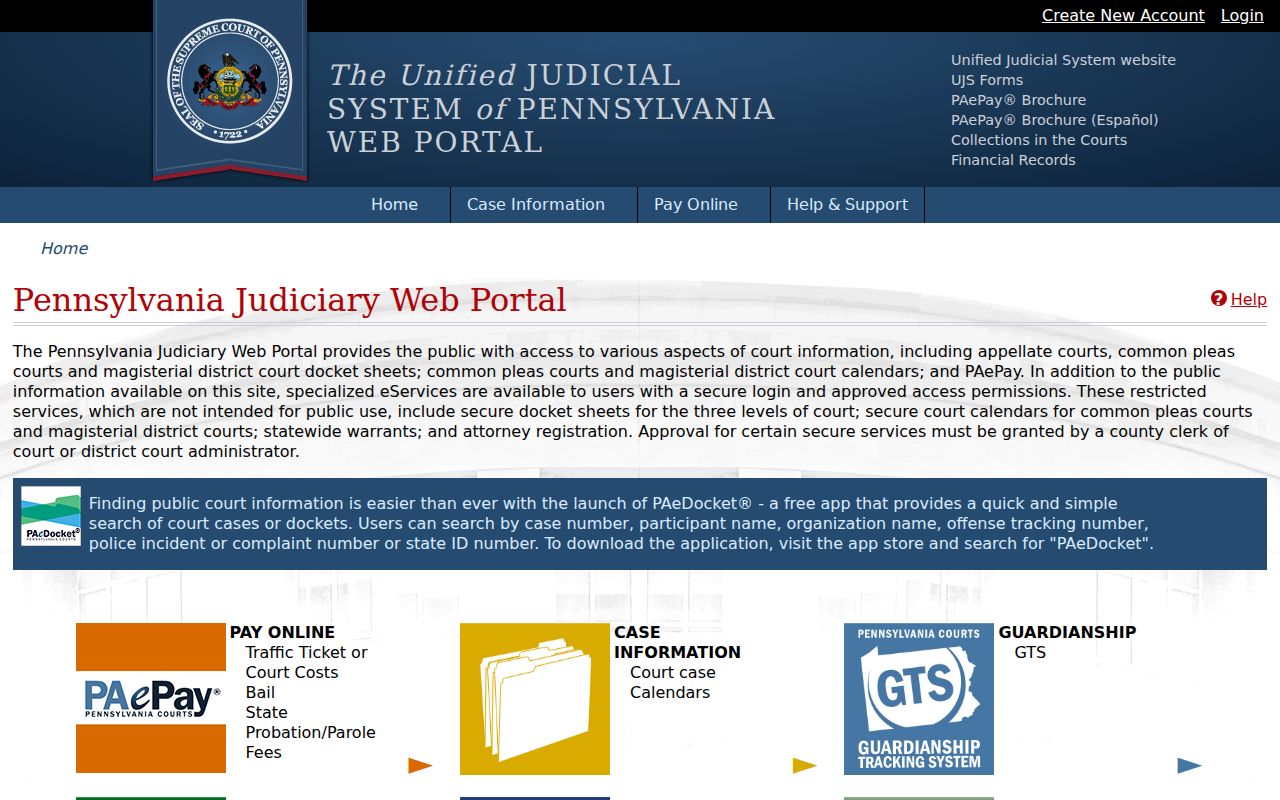
A docket result is a case-location record, so the responsible York court office controls any complete or certified file request.
Current York Resident Directory Sources
Current York record channels each cover a defined relationship. The assessment and Property Viewer tools associate an owner with a parcel. The Recorder identifies named parties to instruments. The voter-status service confirms registration status and polling information, while York's local voter-list process has statutory qualifications and use limits. Probate records can identify an estate's personal representative. None of these sources replaces another, and none is a universal list of residents.
| York source | What it can identify | Custodian | Access limit |
|---|---|---|---|
| Assessment and Property Viewer | Parcel association, owner, deed reference, tax and sale data | Assessment and County GIS | Owner or mailing data is not a household list. |
| Recorder index | Named deed, mortgage, lien, plat, and instrument parties | Recorder of Deeds | Use Landex, SearchIQS, or counter by era. |
| Voter-status service | Registration status and polling information | Pennsylvania and York elections channels | Not an open street browser or general directory. |
| Estate filings | Personal representative and estate proceeding | Register of Wills | The actual file controls heir information. |
| Public court docket | Named party, case, event, and disposition fields | Unified Judicial System | Protected and sealed categories remain unavailable. |
A commercial people-finder category may group claims from many sources, but a custodian's record is the better way to verify a particular fact. Official systems supply the source, date, and stated limitation needed to decide whether a result fits the person or property in question.
York Voter Requests Follow Election Rules
Pennsylvania's public voter-status service is a status and polling-information tool, not a complete public voter-file browser. York County's Elections and Voter Registration office handles registration work, while requests for reports, street lists, or walking lists have a separate elections-report process. The current local Voter Lists form calls for requester identity, the exact list, municipality, ward, district, delivery method, identification, payment route, signature, and an applicable declaration.
State law distinguishes a public information list, street list, walking list, and fuller export. York's forms cite election-use rules and restrict improper use and internet publication. Address Confidentiality Program participation can also produce a lawful substitute address in voter-facing records. Treat an altered or missing address as a protection measure, not a data error to work around.
The Pennsylvania Address Confidentiality Program describes this safety-focused substitute-address protection.
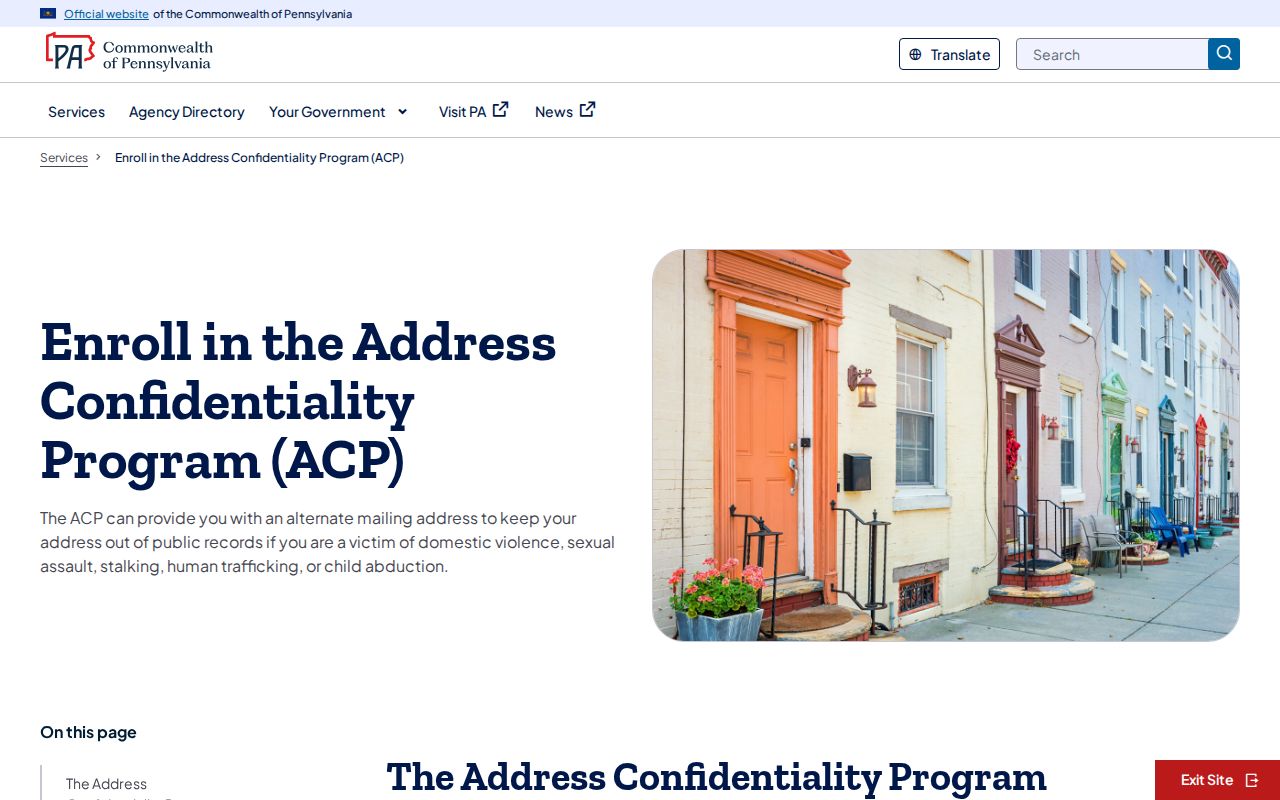
Address confidentiality is one reason a public record may properly omit or replace a person's actual location.
York Marriage and Estate Record Paths
York marriage records are held by the Clerk of Orphans' Court. The County's online certified-copy route applies to records after 1950, while older material follows its mail or phone direction. Estate work belongs with the Register of Wills, where Letters Testamentary or Administration identify the person qualified to represent an estate. Those records can support an heir or family-history question, but a representative is not automatically every heir.
For births and deaths, select the custodian by date. Pennsylvania's Department of Health handles statewide certificates from 1906 forward under eligibility rules. The State Archives has noncertified archival copies for its stated historical windows, and York County maintains limited earlier local groups. The public-release thresholds are 105 years after birth and 50 years after death under the Vital Statistics Law of 1953, section 801, as amended by Act 110 of 2011.
The York Clerk of Orphans' Court identifies the County marriage and historical-record route.
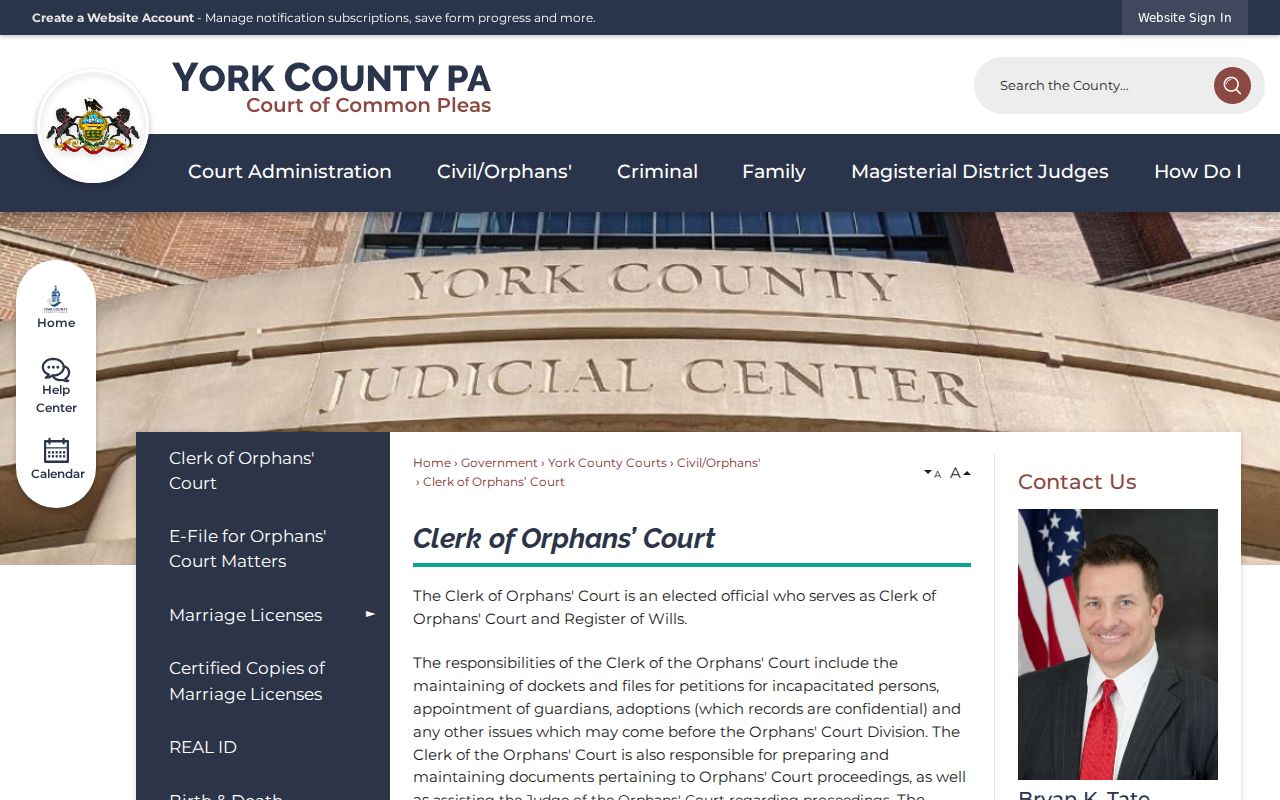
County marriage and estate material follows its own custodian and access rules rather than a general people search.
York Historical Resident Directory Collections
York County History Center's Library and Archives holds York City and County directories, local histories, high-school yearbooks, atlases, maps, periodicals, newspaper microfilm, surname files, and onsite research databases. The reading room is at 121 North Pershing Avenue and its posted schedule is Tuesday through Saturday, 10:00 a.m. to 4:00 p.m. Reservations are recommended. The Center's surname database is an online locator: it maps a searched spelling to a normalized control name, while the full surname file remains a reading-room resource.
FamilySearch catalogs York directory microfilm with documented Boyd, Young, Bell, and Polk issues from 1881-82 through 1905, including no published 1906 issue in that catalog entry. The city-hosted Northwest Triangle appendix offers selected Polk evidence from 1919 through 1997. A directory listing captures a reported name, address, business, vacancy, room, or qualifier in that edition. It is not a deed or proof of uninterrupted residence. The York City Directory collections explain those volumes in detail.
The York Register of Wills is the official source behind this estate-office record image.
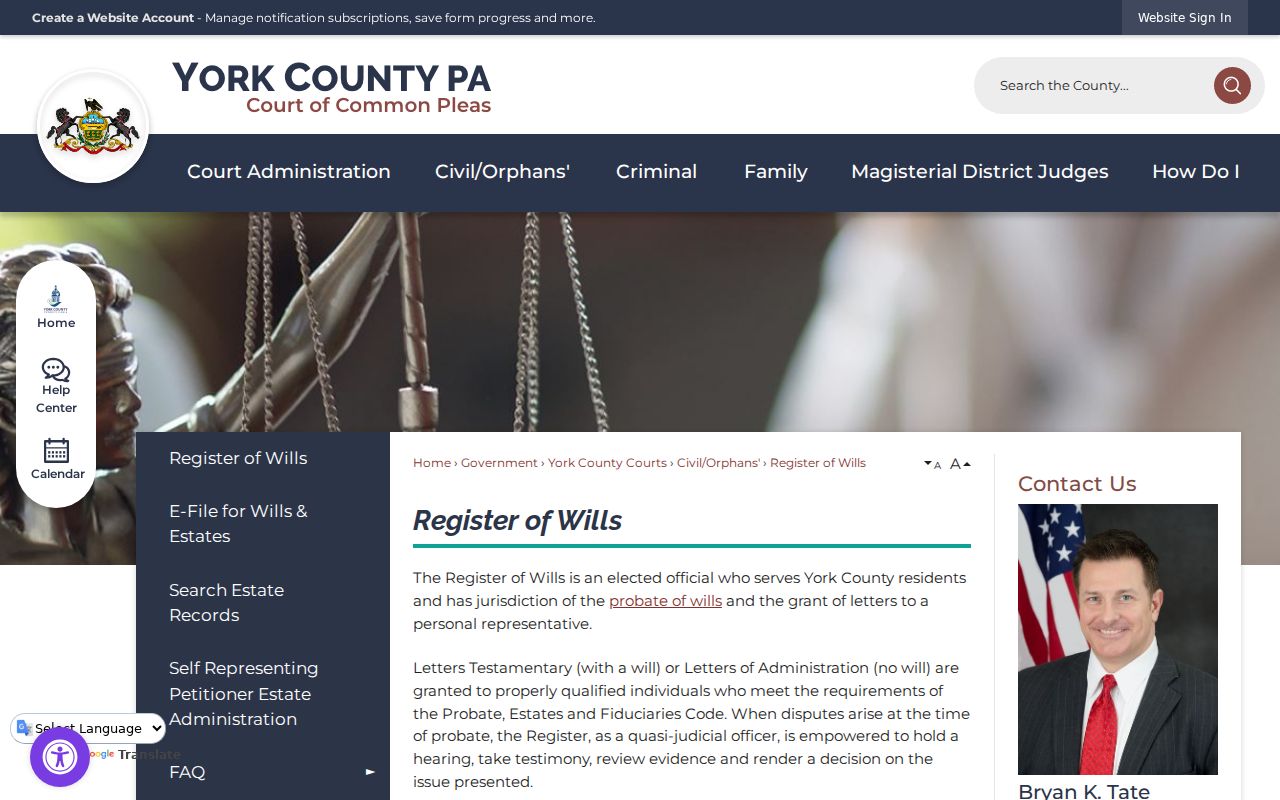
Estate and historical research often moves between County offices and archive collections, with each source answering a different question.
York Records Cross a 1749 Divide
York County became separate in 1749, the same year that anchors the County's recorded deed and estate history. County-linked SearchIQS materials list grantor/grantee images and indexes in documented intervals from 1749 through 1980, while Landex carries the modern public track. The State Archives separately lists York deed books for 1749-1859 and grantor/grantee indexes for 1749-1912 as a fallback. A gap in one website may simply mean the relevant period is held in another system, on microfilm, or at a courthouse terminal.
York's Recorder FAQ gives a practical backward method. Read the current deed's legal description, locate the recital beginning with language such as “It being the same premises which,” record the prior book and page, then repeat with the earlier deed. Preserve the Uniform Parcel Identifier and legal description as street labels change. The historical trail documents transfers, while old directories provide edition-specific household clues.
Act 110 of 2011 is the source displayed in this Pennsylvania vital-records law image.
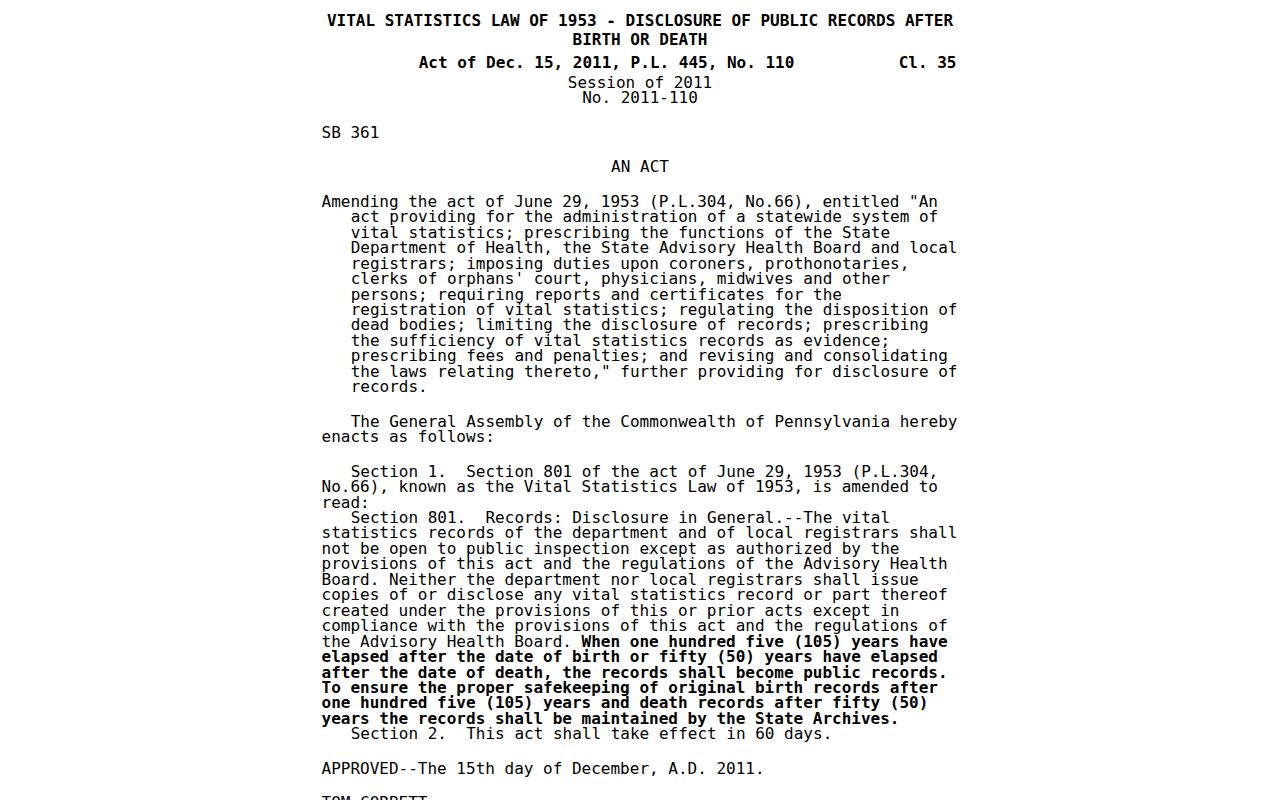
Access dates and legal rules change the record path, so a historical name should always be paired with the right custodian and era.
York Record Terms Worth Knowing
York searches become clearer when the record language stays precise. These terms distinguish a land association from a household claim and help preserve a useful reference when changing streets or years make a simple name search fail.
- Parcel
- A mapped tax and record unit tied to a property.
- Index
- A finding tool that points to a record; it is not always the full image or certified copy.
- Criss-cross directory
- A historical directory arranged by street and address rather than primarily by name.
- Uniform Parcel Identifier
- York County's recorded-property bridge between an address, map, and legal description.
York County began UPI verification in 2001. The first page of a recordable instrument needs that identifier, which can keep a property trail intact even if a street has changed names. For example, the City's ordinance history records Centre Square changing to Continental Square in 1925. Compare both forms before treating an old listing as a failed match.
York Residents Have Protected Records
Pennsylvania's Right-to-Know Law, Act 3 of 2008, presumes access to many existing agency records but yields to exemptions, court orders, privileges, and statutes that protect a category of information. The ordinary written request should identify existing records with enough detail for the custodian to find them. Under the statute, an agency ordinarily has five business days to grant, deny, or issue a written extension notice, and an Office of Open Records appeal route is available after a denial.
Address Confidentiality Program participants may use a substitute address in court and state records, voter registration, marriage licenses, and other listed systems. Court material can also omit sealed, juvenile, abuse-victim, and limited-access records. PennDOT information is governed by separate law and the federal Driver's Privacy Protection Act, not the York resident records trail.
The Pennsylvania Inmate and Department Supervised Individual Locator is the source displayed in this state-locator image.
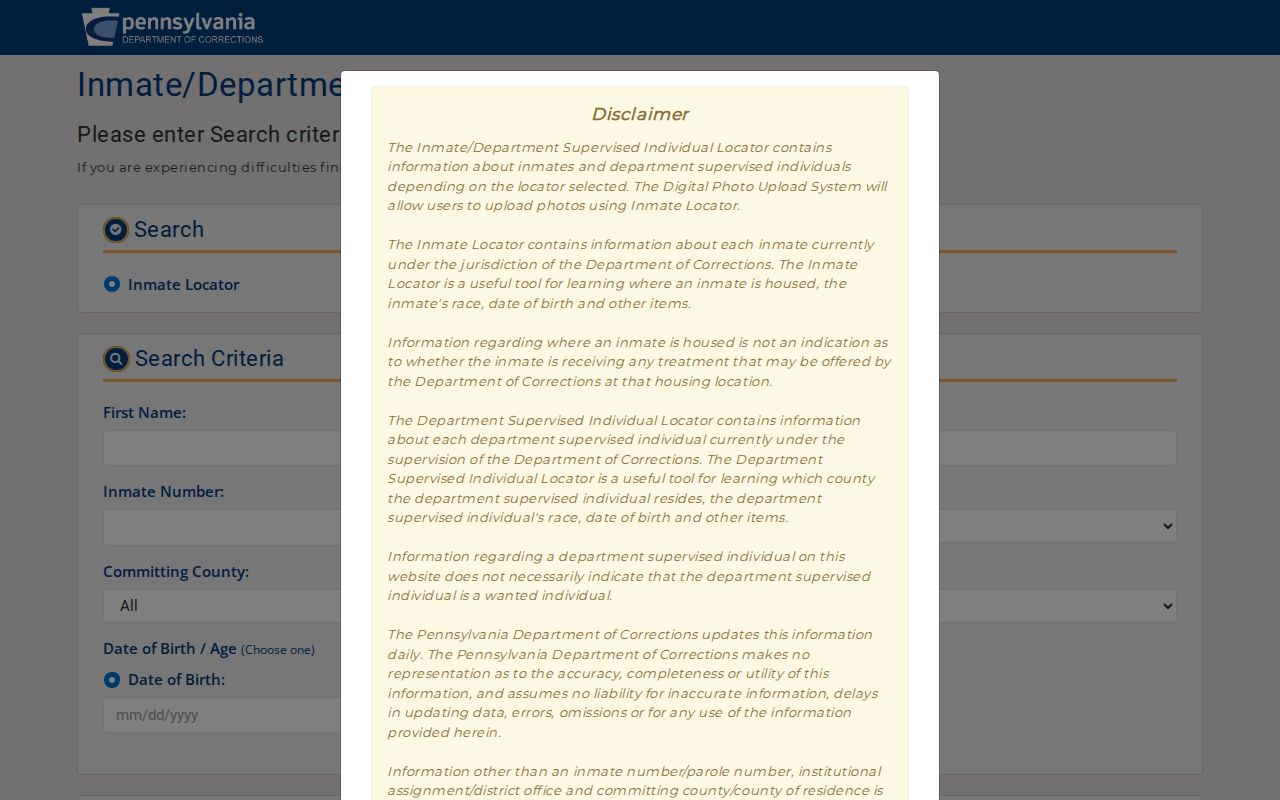
A state locator has a defined custody scope and does not replace County records or establish a person's current York address.